Raymarching
How a fragment shader draws 3D without any geometry: march a ray forward in steps that are guaranteed safe, using a function that measures distance to the nearest surface.
A fragment shader gets one job per pixel: return a colour. It is not handed triangles, vertices, or a depth buffer. So to draw a 3D scene it has to answer, for this one pixel, the question "what would I see looking in this direction?" — and answer it from scratch, in a few hundred instructions.
Raymarching answers it by walking. Fire a ray from the camera through the pixel and step along it until you bump into something. The trick is knowing how big a step is safe. That comes from a signed distance function: a function that takes a point in space and returns the distance to the nearest surface, negative if you are inside it. A sphere of radius 1 at the origin is just length(p) - 1.0.
If the nearest surface is 3 units away, you can safely jump 3 units in any direction without passing through anything. So you jump, ask again, and jump again. Far from the scene the steps are huge; as you approach a surface they shrink, and the ray glides in and stops. That is the whole algorithm, and it is why the loop below is six lines long.
What you get for that is unusual. The scene is a mathematical function rather than a mesh, so it has infinite resolution — zoom forever and the sphere stays a perfect sphere. Objects combine with min (union) and max (intersection). Repeat space with mod and you get infinite copies for the price of one. Blend two shapes with a soft minimum and they melt together, which is a nightmare with polygons and one line here.
The cost is that every pixel pays for the whole scene on every frame, and the step count trades directly against speed. Pull the iteration slider down on the example and you can watch the surface come apart — the ray runs out of steps before it arrives, and the shape dissolves into fog.
const float TMAX = 48.0;
float t = 0.0;
float d = 0.0;
for (int i = 0; i < 150; i++){
    d = map(ro + rd * t);
    if (d < 0.0013 * (1.0 + t * 1.2) || t > TMAX) break;
    t += d * 0.8;
}
Sphere tracing, entire. map() returns a lower bound on the distance to the nearest surface, so stepping exactly that far can never overshoot — that guarantee is the whole algorithm. The * 0.8 is a safety factor for when a domain warp makes the estimate lie a little; this shader calls that out further up as keeping the field Lipschitz-safe. The hit epsilon grows with t because a pixel covers more world space the further away it is, so a fixed epsilon both wastes steps in the distance and shimmers.
vec3 calcNormal(vec3 p){
    vec2 e = vec2(0.0015, -0.0015);
    return normalize(e.xyy * map(p + e.xyy) + e.yyx * map(p + e.yyx) +
                     e.yxy * map(p + e.yxy) + e.xxx * map(p + e.xxx));
}
There is no mesh, so there is no normal to look up — you take the gradient of the distance field instead. This is the tetrahedron trick: four offsets arranged so the swizzles e.xyy / e.yyx / e.yxy / e.xxx both move the sample point AND weight the result, which gets a normal in four map() calls rather than the six a naive central difference needs.
87 shaders using this
most-seen first · all CC0, take any of it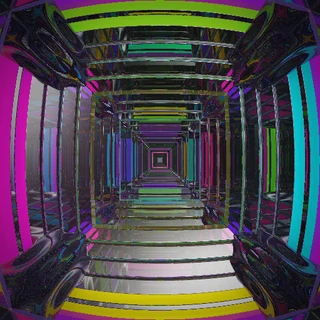 Glass square-tube tunnel
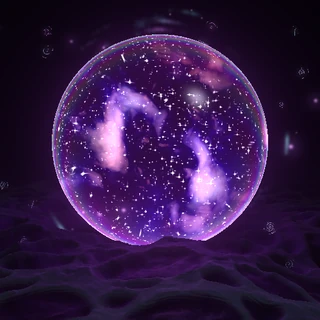 Ponder Orb
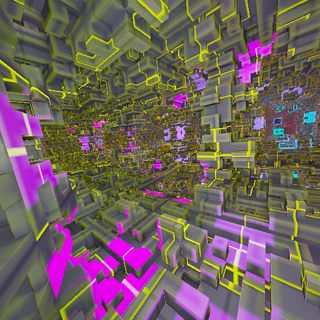 Can't Find My Way Out
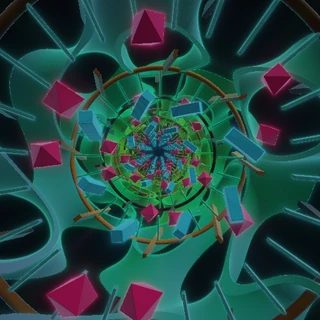 Cathedral of the Last Photon
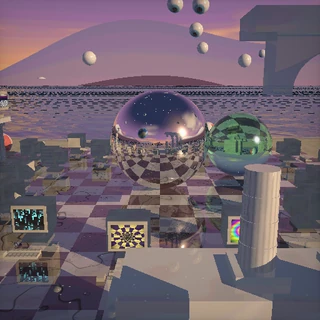 Still Rendering
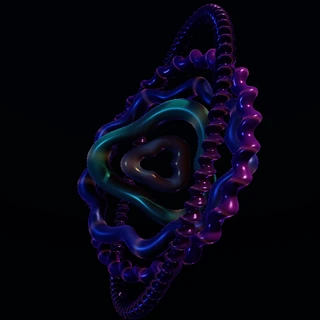 Nested Orbit Reliquary — Instrument Edition
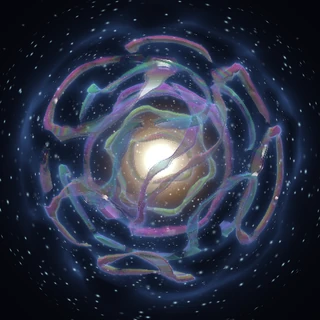 Reliquary
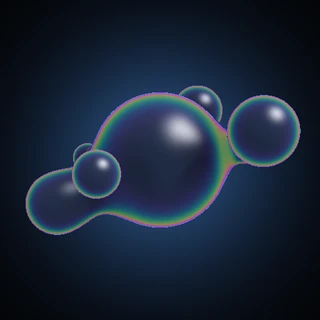 Orbiting Prism Cluster
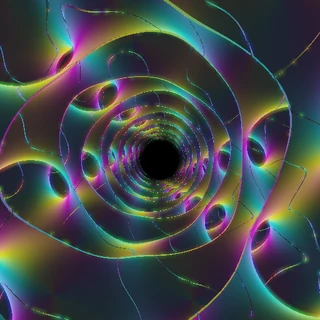 Gyroid Vibes
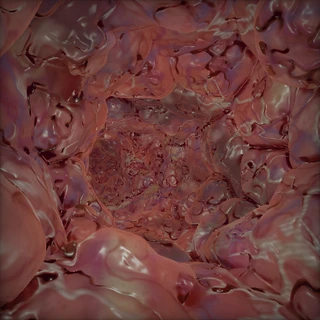 Meat Hole
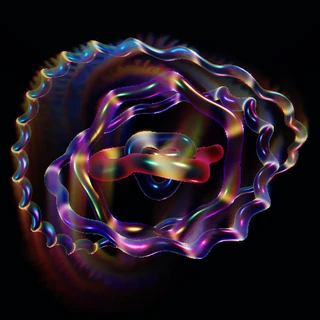 Armillary Wake
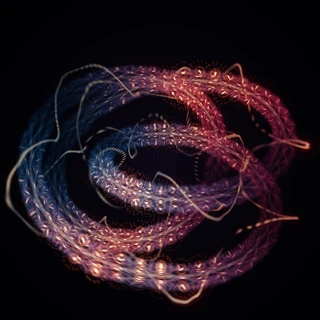 Trefoil Cord
 RGB Serpents
 Sacred Slop
 Aero
Aero Fih
Fih Portal Path v1
 Stygian
 brontosoarin
 Blue Marble V2
 Apollonian Rapture
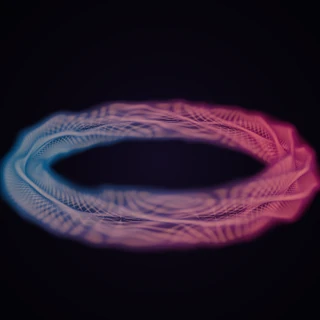 Plasma Weave
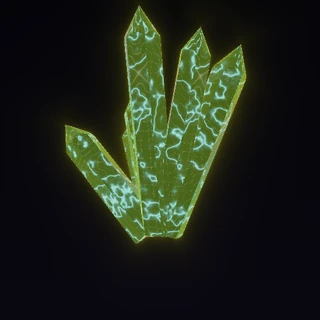 Cymatic amethyst: hex crystal cluster with Chladni nodal lines and labyrinth ridges etched across violet facets, gold sa
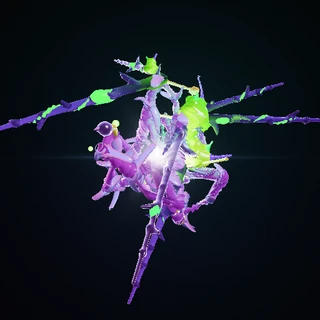 Symbiont
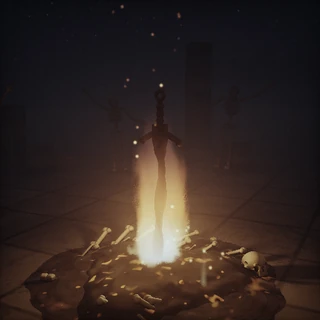 Bonfire Litty
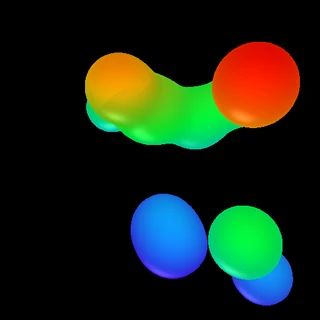 Drifting Orbs
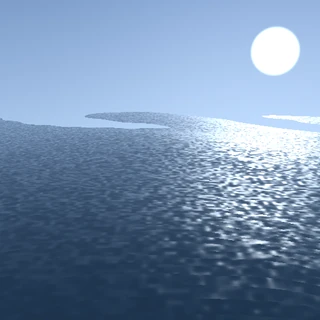 Cold Light
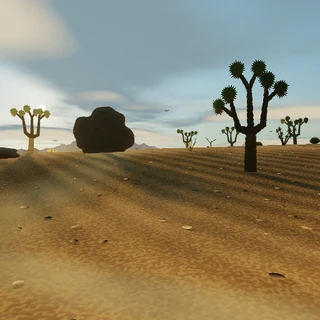 Mojave
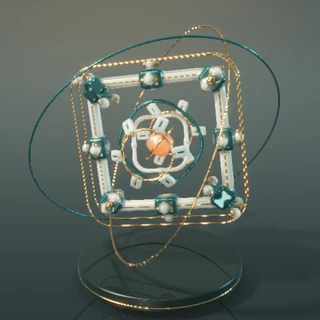 CHRONOFOLD — Second Movement
 Glass Orrery
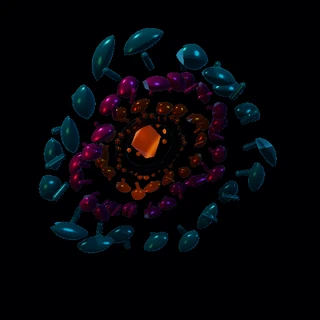 Solar Iris Reliquary
 Piped Up
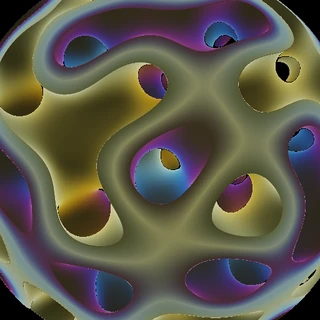 Neon Gyroid Orb
 Cold Storage
 generated
 Warp Conduit
 Nacre Bulb
 Metallurgy
 Insert Disc
 Worm
Worm Back The Way You Came
 Reliquary Cube
 Blue Marble
 the poo rooms
 Neon Hyperspace Corridor
 Aurora Torus
 the burbs
 Vein Atlas
 mothcore
 Skrrt
Skrrt liqa sto
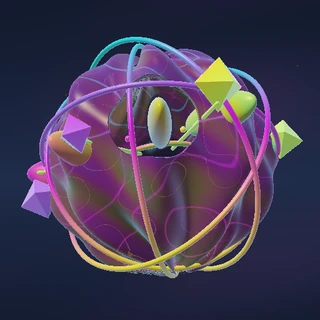 Tidal Reliquary
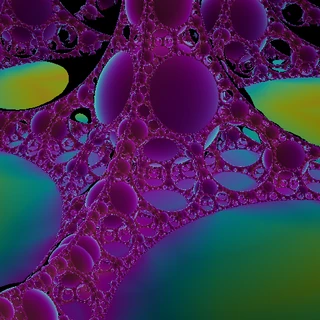 Iridescent Apollonian Foam
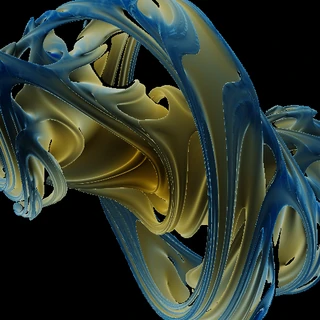 Gilded Quaternion
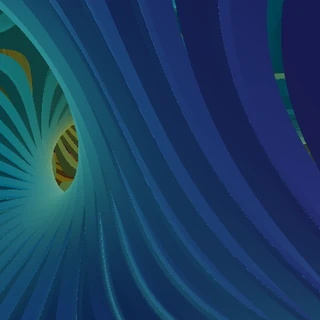 Gyroid Drift
 Chrome Dreams
 Conduit Sore
 hatchback
 The Tidal Cathedral
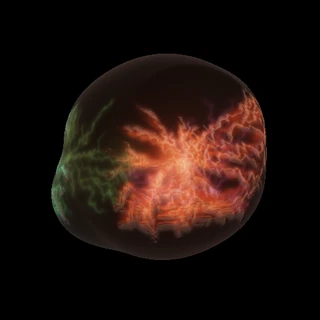 Organ
Organ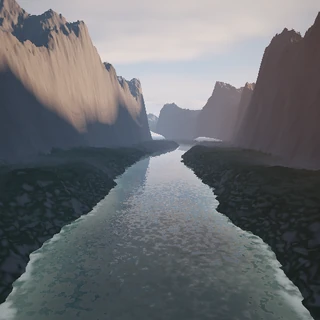 River Walk
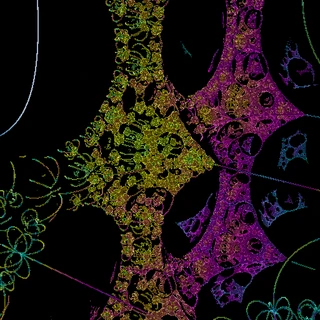 Kleinian Necklace
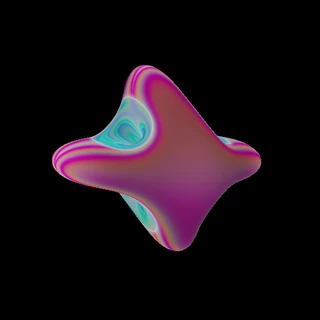 Orbital
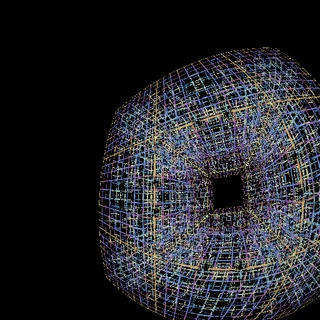 Laser Lattice Wormhole
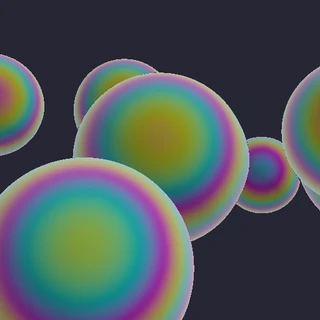 Iridescent Gem Cluster
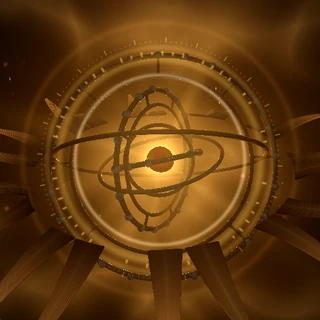 angelslop
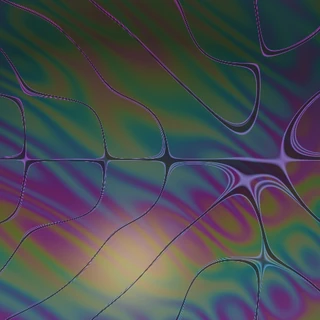 Fractured Geode: Soft Asterism
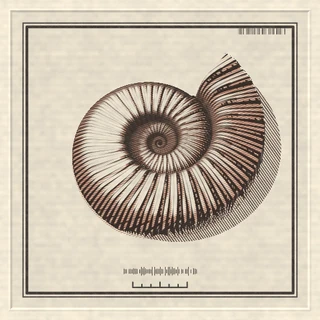 Plate XXIV: Ammonite
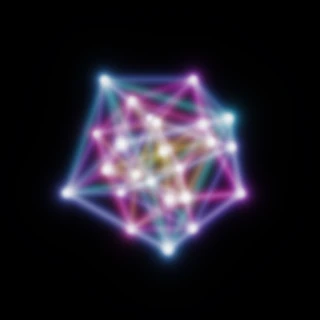 Clifford Cage
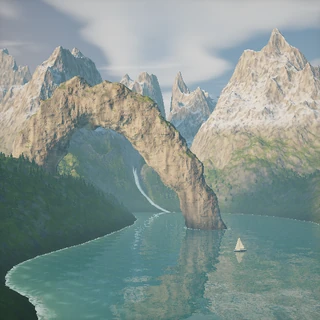 The Tidal Cathedral II
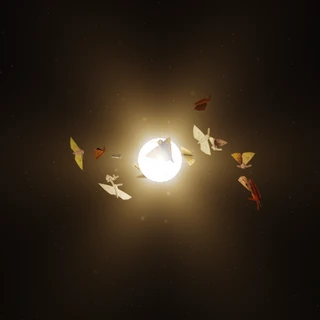 Vigil
Vigil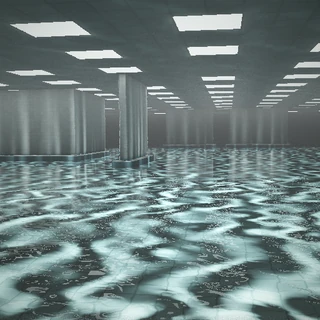 the pool rooms
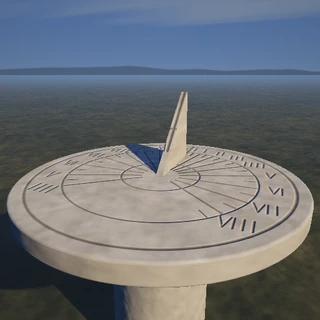 Meridian
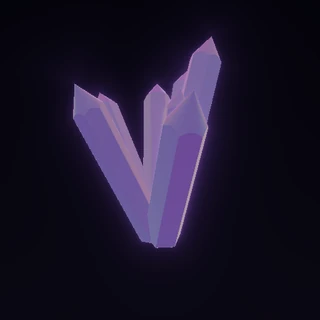 Amethyst
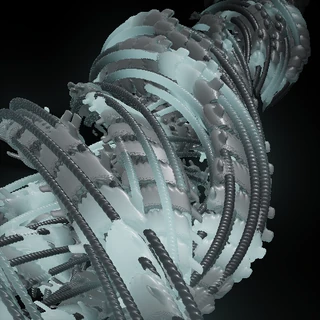 Plexus
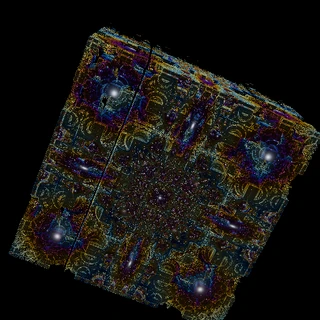 Mandelbox Reliquary
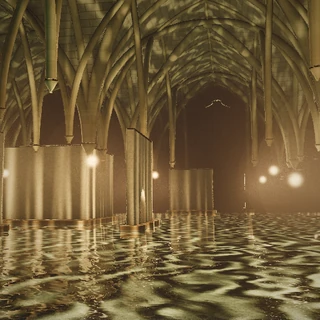 goth poolrooms
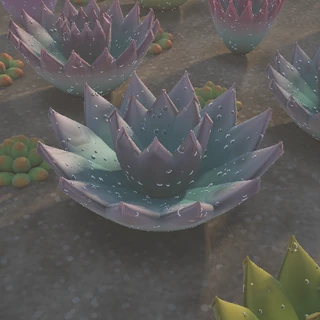 Succulent Garden, Golden Hour
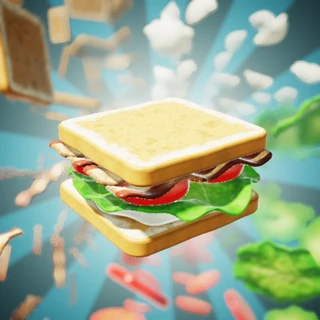 Sandwich Supernova
 Event Horizon
 Cloudwalk
 Hopf Bloom
 Neon dot-lattice corridor: a tiled Menger tunnel flown through with wandering banking, depositing edge-hot neon dots alo
 Division
 REC
REC Computah
 neptune.exe